Atopic skin is a common term used to describe the skin of individuals suffering from Atopic Dermatitis (AD). AD is not a simple condition that can be cured and forgotten; it is primarily a disease, often referred to as a civilizational disease, with genetics playing a significant role. What are the causes of its development, and why is it described this way?
In reality, no single, specific cause of Atopic Dermatitis has been identified. Factors contributing to its development include changing environmental conditions, air pollution, toxins, and food rich in preservatives, colorants, and other modifying substances. Civilizational progress has led to dry and sensitive skin (with a weakened hydrolipid barrier) responding to the aforementioned factors with intense itching, burning, vesicles, papules, and pustules—typical symptoms of Atopic Dermatitis.
Unfortunately, Atopic Dermatitis is an incurable skin disease, but this does not mean that its symptoms cannot be alleviated or the emergence of new ones prevented. Conscious and regular care with dedicated cosmetics can bring relief and improve the skin’s appearance.
HOW TO CARE FOR SKIN WITH ATOPIC DERMATITIS?
- Be diligent in skincare and protect areas most prone to AD symptoms.
- Use dedicated products with formulations specifically prepared and tested for AD.
- Avoid products that damage the skin’s hydrolipid barrier (e.g., soap) and instead use gentle cleansing products.
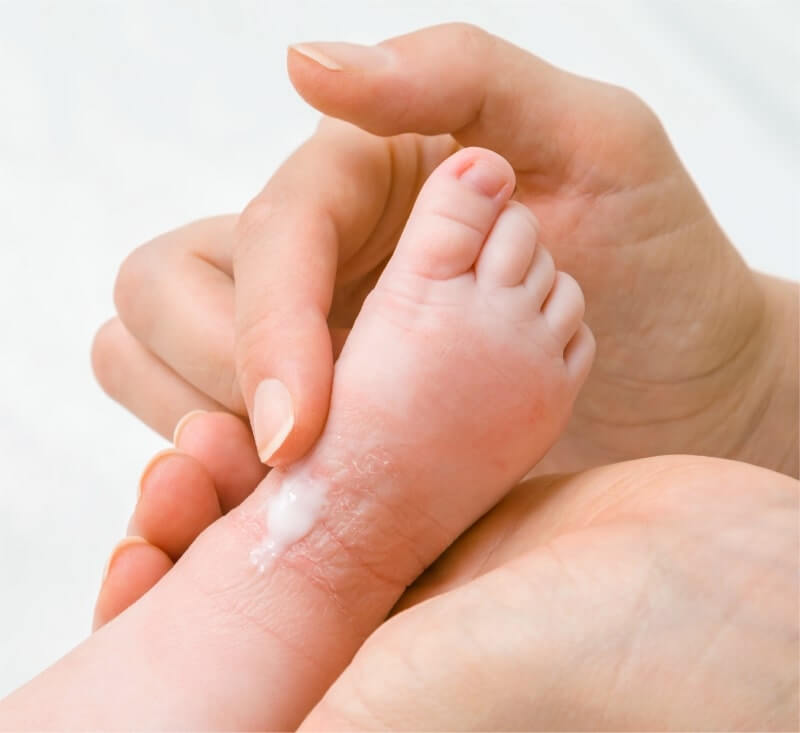
- Moisturize the skin with specialized products to provide an additional protective layer against external factors that may exacerbate symptoms.
OTHER SYMPTOMS ASSOCIATED WITH ATOPIC DERMATITIS INCLUDE:
- Inflammatory changes of the vermilion border.
- Eyelid swelling.
- Intensification of itching due to heat and sweating.
- Worsening skin condition due to stress.
- Genetic predisposition: if at least one parent has atopic dermatitis or there is a strong family history of allergies, especially so-called atopic diseases (which, in addition to AD, include bronchial asthma and allergic rhinitis), the risk of developing AD in a child is significantly increased.
During the course of the disease, there may be periods when typical symptoms of atopic dermatitis do not appear. Unfortunately, this usually does not indicate a permanent cure.
CAUSES, SYMPTOMS, AND LOCALIZATION OF SKIN LESIONS IN ATOPIC DERMATITIS
Causes of the Disease:
Healthy skin is characterized by closely adhering epidermal cells (the epidermis is the outer layer of the skin), forming a natural protective barrier against external factors. In individuals with AD, the structure and function of the epidermal barrier are disrupted due to genetic factors and chronic inflammation. Reduced content of epidermal lipids leads to decreased water binding and increased transepidermal water loss, contributing to dryness and cracking of the epidermis. In such situations, allergens or other substances can easily penetrate deeper into the skin, causing inflammation. Additionally, deficiencies in epidermal proteins (filaggrin) also contribute to excessive permeability of the skin barrier to water and allergens.
Symptoms of the Disease:
Atopic dermatitis manifests in various ways, but the most typical symptoms are:
- Persistent skin itching.
- Skin dryness.
- Eczematous rash.
Localization of Lesions:
In severe cases, the entire face, scalp, trunk, and extensor surfaces of the limbs may be affected.